 简体中文
简体中文
In the vast world of metals, aluminum ingots, with their unique physical properties, wide range of applications and sustainable development potential, have become an indispensable important raw material for modern industry. From aerospace to daily consumer goods, from the construction field to high-tech industries, aluminum ingots are everywhere. They not only promote technological progress but also profoundly influence human lifestyles.
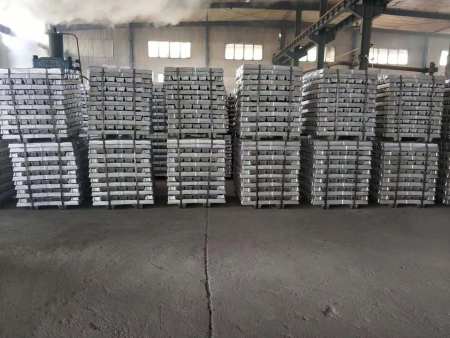
The definition and production of aluminium ingots Aluminium ingots, as the raw material form of aluminium, are high-purity aluminium metal block products obtained through the smelting and refining of bauxite. Aluminum is a silvery-white metal and ranks third in the Earth's crust in terms of content, only after oxygen and silicon. Its density is only 2.7103g/cm³, approximately one-third that of steel, copper or brass, and thus it is hailed as a "light metal". The production process of aluminium ingots involves multiple steps such as bauxite mining, alumina production, and aluminium electrolysis, making it a complex and meticulous systematic project. The wide application of aluminum ingots: The light weight, corrosion resistance, and excellent electrical and thermal conductivity of aluminum ingots have made them shine in many fields: Aerospace: Aluminum ingots are important materials for manufacturing aircraft, rockets, spaceships and other spacecraft. Its lightweight feature helps to reduce the self-weight of the aircraft, increase the payload and improve fuel efficiency. Transportation: In automobiles, trains, subways, ships and other means of transportation, aluminum ingots are widely used in key parts such as vehicle bodies, engine components and wheel hubs to reduce energy consumption and improve driving performance. In the field of construction, aluminum ingots are the main raw materials for building materials such as aluminum alloy doors and Windows, curtain walls, and roofing materials. Their characteristics of corrosion resistance, easy processing, and elegant appearance make aluminum alloy an ideal choice for modern architecture. In the electronics industry, aluminum ingots are used to manufacture capacitors, integrated circuit packaging, etc. in the electronics industry. Their electrical conductivity and stability provide a strong guarantee for the performance of electronic products. In the packaging industry, aluminum foil, as a thin and foldable metal material processed from aluminum ingots, is widely used in the packaging of food, medicine, tobacco and other products, ensuring product quality and extending the shelf life. In the chemical industry, aluminium ingots are also important raw materials for manufacturing chemicals such as aluminium hydroxide and alumina, which are widely used in fireproof materials, ceramic materials and other fields. Against the backdrop of growing environmental awareness, the sustainable development characteristics of aluminum ingots are particularly prominent. Aluminum is a recyclable metal with a recycling rate of over 75%, which is much higher than that of other metals. The recycling of aluminium ingots not only reduces resource consumption but also lowers energy consumption and environmental pollution, which is in line with the concepts of green economy and circular economy. In addition, with the advancement of technology, the production process of aluminum ingots is constantly being optimized, such as the adoption of electrolysis technology and the development of low-energy-consuming smelting processes, in order to reduce carbon emissions and energy consumption during the production process. Looking ahead, the application fields of aluminum ingots will continue to expand, especially in emerging areas such as new energy vehicles, intelligent manufacturing, and green buildings, where aluminum ingots will play an even more significant role. Meanwhile, with the increasing emphasis on sustainable development, the recycling and green production of aluminum ingots will become the direction of industry development. Through technological innovation and industrial upgrading, the aluminum ingot industry will contribute its own strength to achieving the carbon neutrality goal. In conclusion, aluminum ingots, as the cornerstone and innovator of modern industry, have profoundly influenced all aspects of human society with their unique charm and wide range of applications. From aerospace to daily consumer goods, from the construction field to high-tech industries, aluminum ingots, with their light weight and corrosion resistance, are constantly driving technological progress and industrial upgrading. In the future, aluminium ingots will continue to forge ahead on the path of sustainable development and contribute more to the prosperity and progress of human society.
